
Disclaimer: This guide is general information about how boat engines and drives work. It is not professional nautical, mechanical, or safety advice; see our disclaimer.
Quick answer: Motorized boats work by turning fuel or battery power into rotation. A driveshaft and gearbox carry that spin to a propeller or water jet, which pushes water backward so the boat moves forward. Outboards, inboards, sterndrives, jets, pods, and electric motors all follow this pattern.
A 14-foot jon boat and a 200-foot superyacht look nothing alike, yet both do the same job every time they leave the dock: they turn stored energy into a push against the water. Once you see that one idea, motorized boats and how they work stop being a mystery.
We call the idea the Power Path. Power gets made, power gets moved, the water gets pushed, and the thrust gets pointed. Every outboard, sterndrive, jet ski, and electric cruiser runs some version of those four steps.
Here’s how a boat engine makes power, how each drive type gets it to the water, which engines common boats use, and how federal rules cap the horsepower a boat is rated to carry.
Motorized Boats and How They Work: What Are the 4 Basic Steps?
Every motorized boat turns energy into spin, sends that spin down to the water, and pushes water backward to move forward. These four steps are the Power Path, and every boat follows them, from a jon boat to the ferries and cruise ships you ride on vacation.
- Make power. A gas or diesel engine burns fuel to push pistons and turn a crankshaft. An electric motor uses a magnetic field to spin a shaft instead, with energy from a battery bank.
- Move power. A driveshaft carries the spin toward the water. A gearbox and clutch sit along the way and give you three choices: forward, neutral, and reverse. Together they form the drivetrain.
- Push water. A propeller’s angled blades, or a jet’s impeller, grab a large mass of water and speed it backward. Newton’s third law does the rest: push water back, and the boat goes forward.
- Point the thrust. You steer with a tiller, a wheel, or a joystick. That either swings the whole drive, turns a rudder, or aims a nozzle. A throttle sets how hard the engine works.
The last step is where motorized boats and how they work differ most from cars: boats have no brakes, so you slow down by easing off the throttle or shifting into reverse.
How Does a Boat Engine Turn Fuel Into Motion?
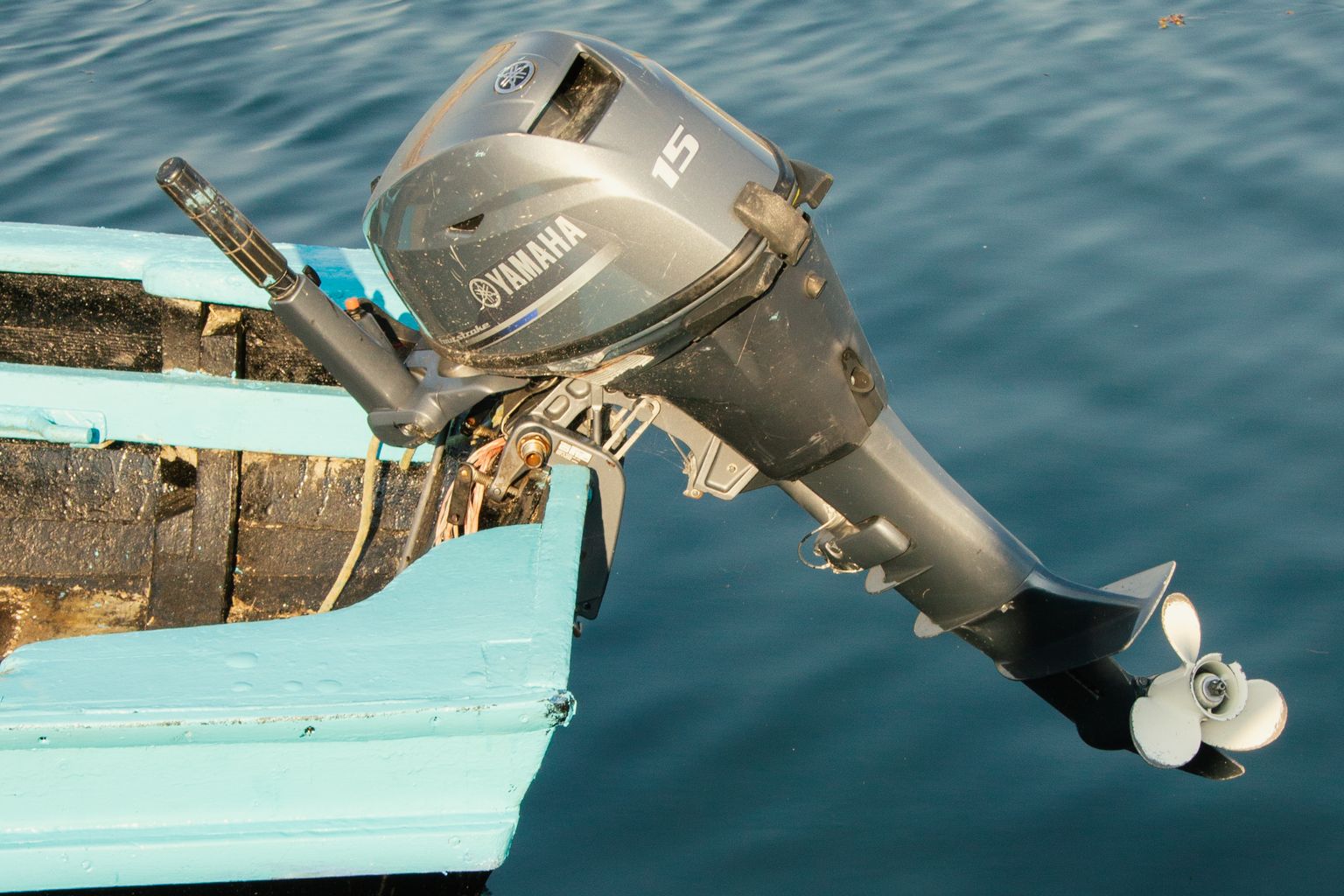
A boat engine burns gas or diesel to push pistons, and those pistons turn a crankshaft, much like a car engine. The big difference is workload. A car often coasts at light throttle, while a boat engine pushes against water the whole time, so it runs under steady, heavy load.
What Happens in a 4-Stroke Boat Engine?
Most modern outboards and inboards use the four-stroke cycle. Each cylinder repeats four moves:
- Intake: the piston moves down and pulls in air and fuel.
- Compression: the piston moves up and squeezes that mix.
- Power: a spark plug fires (or, in a diesel, compression heat ignites the fuel), and the blast drives the piston down.
- Exhaust: the piston rises again and pushes the burned gases out.
A two-stroke engine squeezes the same work into two moves, so it fires once every turn of the crankshaft. That makes two-strokes light for their power, so they still show up on small outboards.
How Do Boat Engines Stay Cool?
Most boat engines cool themselves with the water they float on. In a raw-water (open) system, a rubber impeller pump pulls in lake or seawater, runs it through the engine, and sends it back out. A closed system keeps coolant inside the engine, like a car, and uses outside water to cool that coolant through a heat exchanger.
The U.S. Coast Guard’s Recreational Boating Statistics 2024 ranked machinery failure as the fourth most common primary cause of recreational boating incidents in 2024, with 289 incidents. Engine failure alone caused 143 of them, about half.
Which Propulsion Systems Do Motorized Boats Use, and How Do They Work?
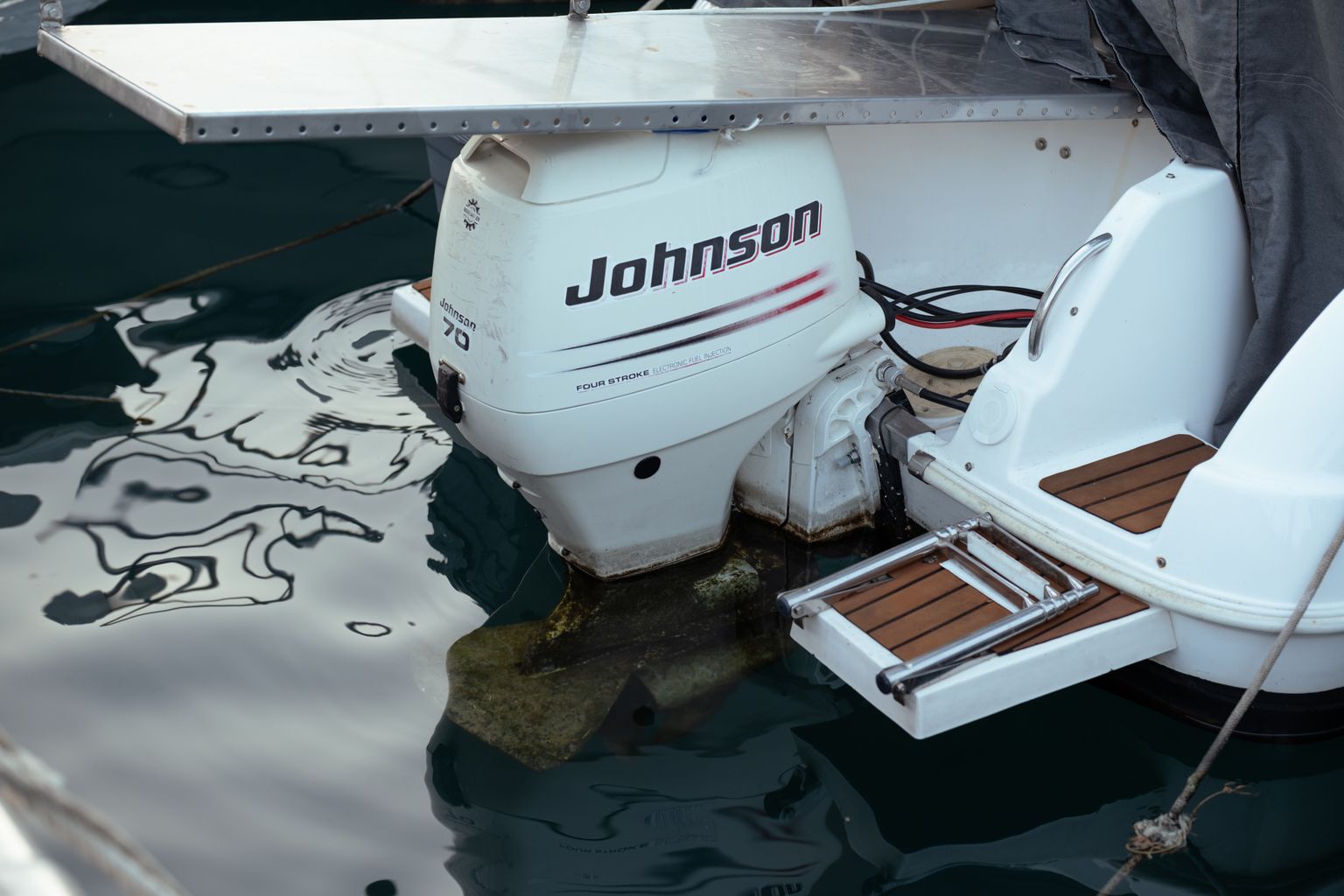
Motorized boats use six main propulsion systems: outboards, inboards, sterndrives, jet drives, pod drives, and electric motors. They differ in where the engine sits, how power reaches the water, and how the boat steers.
Of the 5,365 vessels involved in US recreational boating incidents in 2024, the same USCG report lists 3,757 (70%) as propeller-driven and 1,104 (21%) as water-jet. These raw counts show how common each drive is.
Outboard Motors
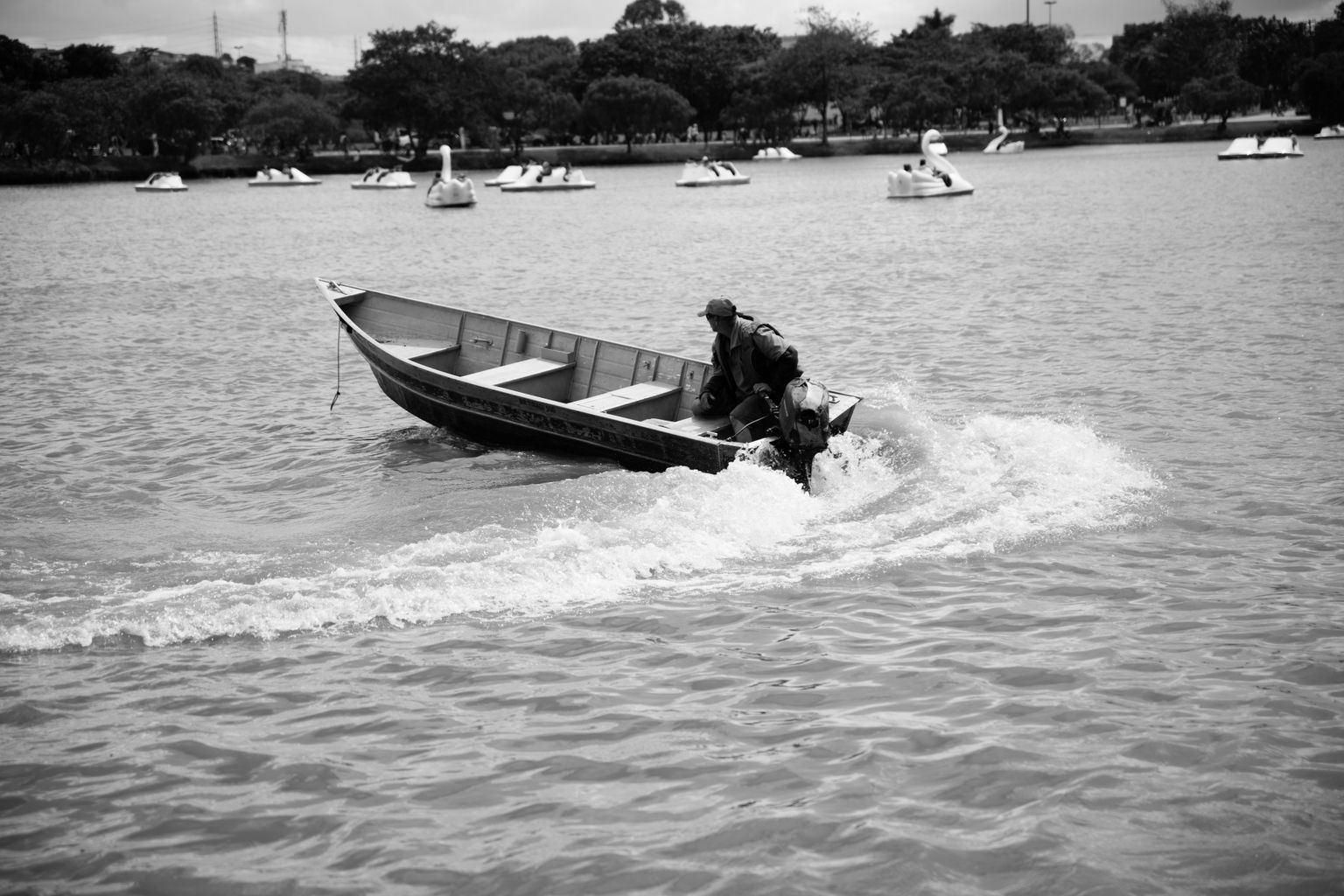
Where it sits: clamped to the transom, the flat back wall of the boat. How it drives: the powerhead on top spins a vertical driveshaft down the midsection to a gearbox in the lower unit, which turns the spin 90 degrees to the propeller. How it steers: the whole motor pivots. Best for: small and mid-size boats like fishing boats and speedboats, since it tilts up for shallow water and comes off for repairs.
Inboard Engines (Straight Shaft and V-Drive)
Where it sits: inside the hull. How it drives: a shaft runs through the bottom of the boat to a propeller underneath. How it steers: a rudder behind the propeller turns the boat. A V-drive puts the engine at the back to free up deck space. Best for: wake and ski boats, towboats, larger yachts, and sailboats with a built-in engine.
Sterndrives (Inboard/Outboard)
Where it sits: inside the boat, against the transom. How it drives: the engine connects through the transom to a drive leg that looks like the bottom half of an outboard. How it steers: the leg pivots, just like an outboard. Best for: bowriders and sport boats wanting inboard power with agile, outboard-style steering.
Jet Drives
Where it sits: inside the hull. How it drives: the engine spins an impeller that sucks water in under the boat and forces it out a high-pressure nozzle at the back. How it steers: the nozzle swings left or right, so steering needs throttle. Best for: personal watercraft and jet boats in shallow water, with no propeller below.
Pod Drives
Where it sits: inside the hull, with pods mounted through the bottom. How it drives: each pod has its own propellers. How it steers: the pods rotate independently, and many systems tie them to a joystick for docking. Best for: larger cruisers and yachts that need tight marina control.
Electric Motors and Trolling Motors
Where it sits: an electric drive can take outboard, inboard, or pod form. How it drives: a battery bank feeds a controller, which meters power to a motor that spins the propeller. Electric motors deliver full torque the moment they start turning, which is a big plus for docking. It also produces zero direct exhaust on the water. Compared with gas, electric drives run quieter and skip the fuel dock but carry less range. Best for: quiet daytime cruising on lakes and canals. A trolling motor is a small electric motor on the bow or transom for slow, near-silent fishing.
How Does a Propeller Push a Boat Forward?
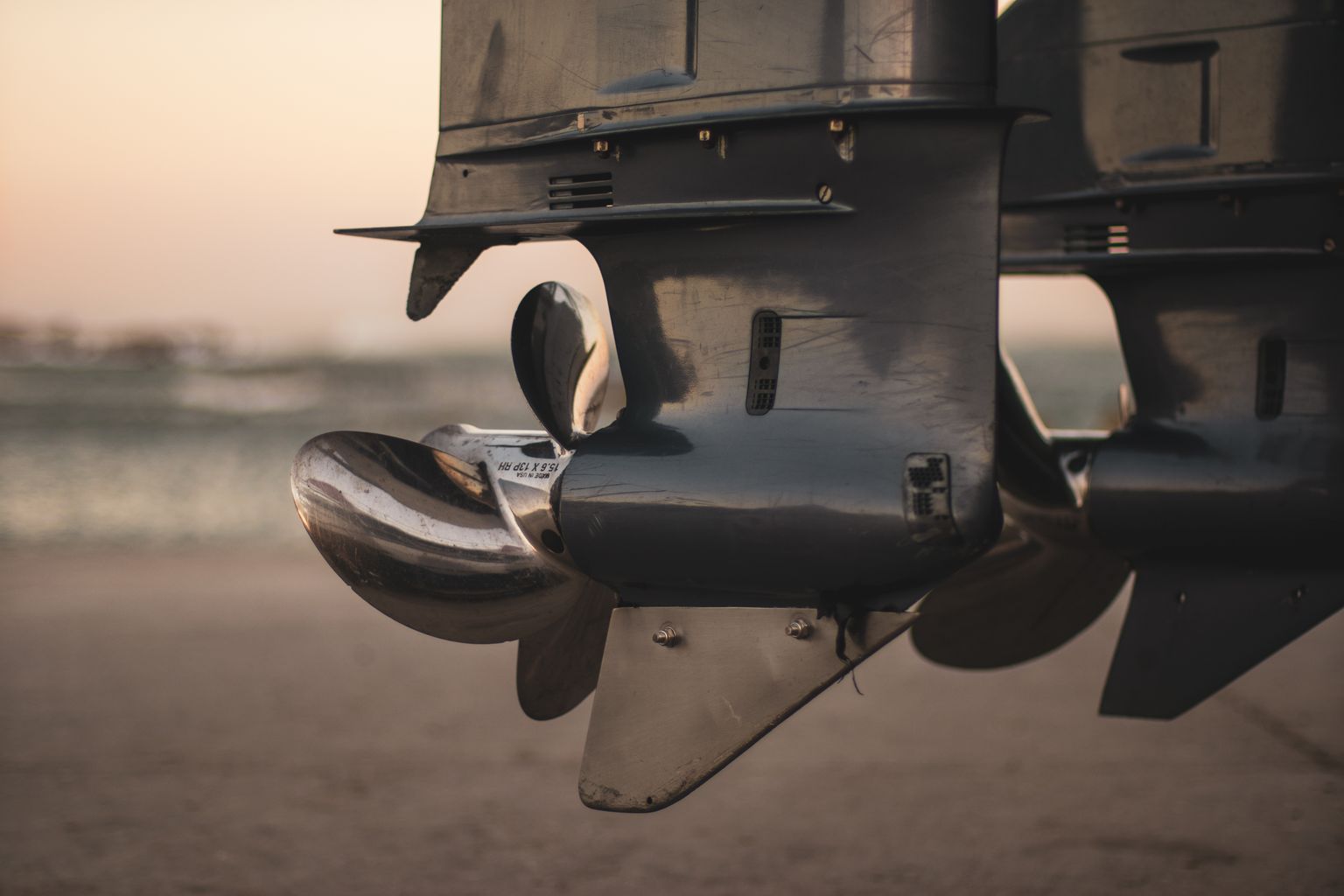
A propeller pushes a boat forward by throwing water backward with angled blades. Each blade works like a twisted wing, creating higher pressure on one face and lower pressure on the other, which shoves water toward the stern.
Two numbers describe a propeller. Diameter is the width of the circle the blade tips make. Pitch is how far it would move forward in one turn through something solid, in inches. More pitch trades quicker starts for top speed.
Spin a propeller too hard and the low-pressure side forms vapor bubbles, called cavitation, which costs grip. Hull, weight, and engine power all affect speed, which our guide to how fast a yacht can go breaks down by yacht type.
Which Engine Do Common Motorized Boats Use?
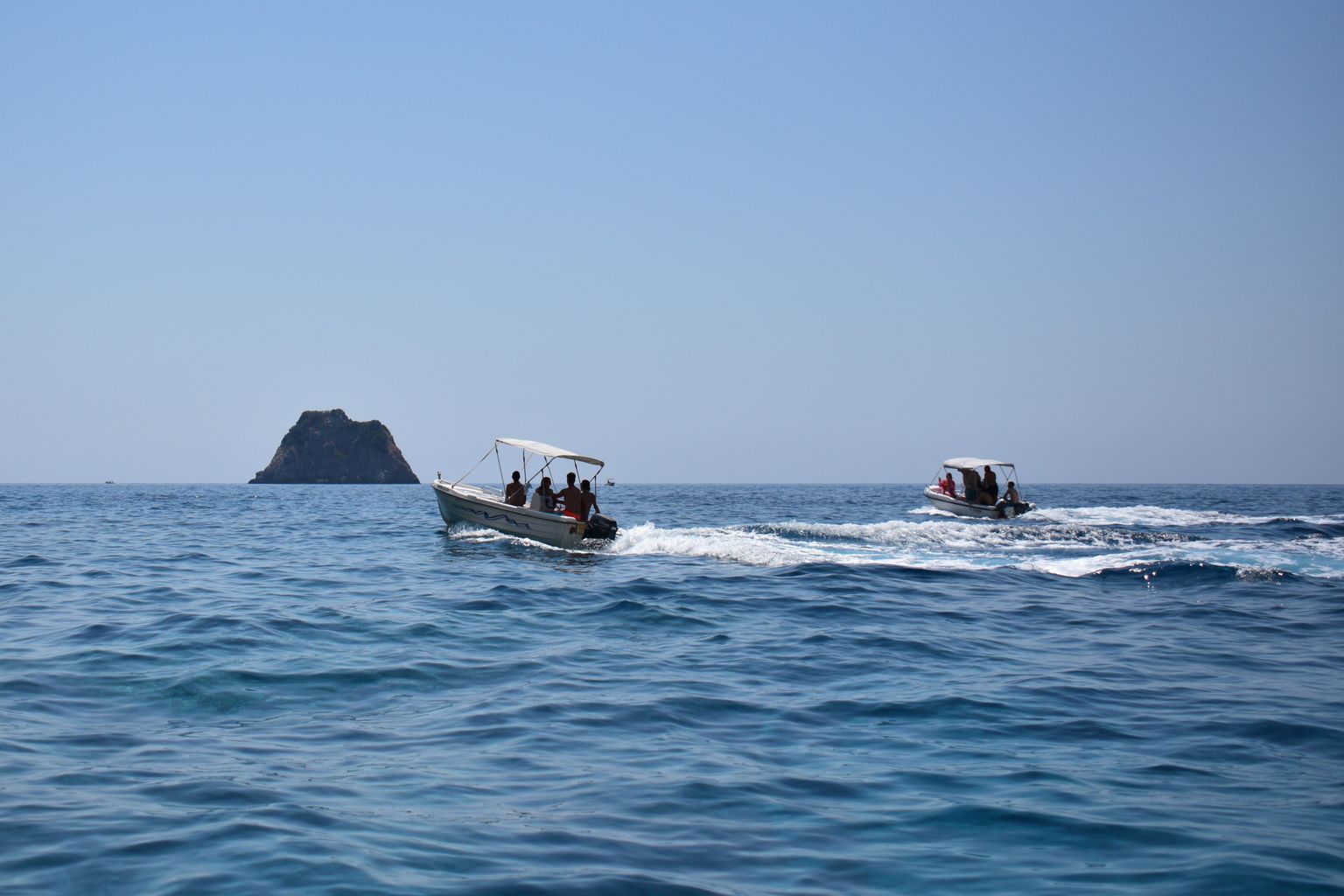
Most small boats run outboards, wake boats and cruisers run inboards or sterndrives, and big yachts and ships use inboard diesels or pods.
At the top end, the Lamborghini yacht runs twin MAN V12 engines, and our yacht cost guide shows how price climbs with size. Cruise ships are another story, and our guide to how fast cruise ships go explains why they rarely sail at full speed.
How Much Horsepower Does a Boat Need, and How Fast Will It Go?
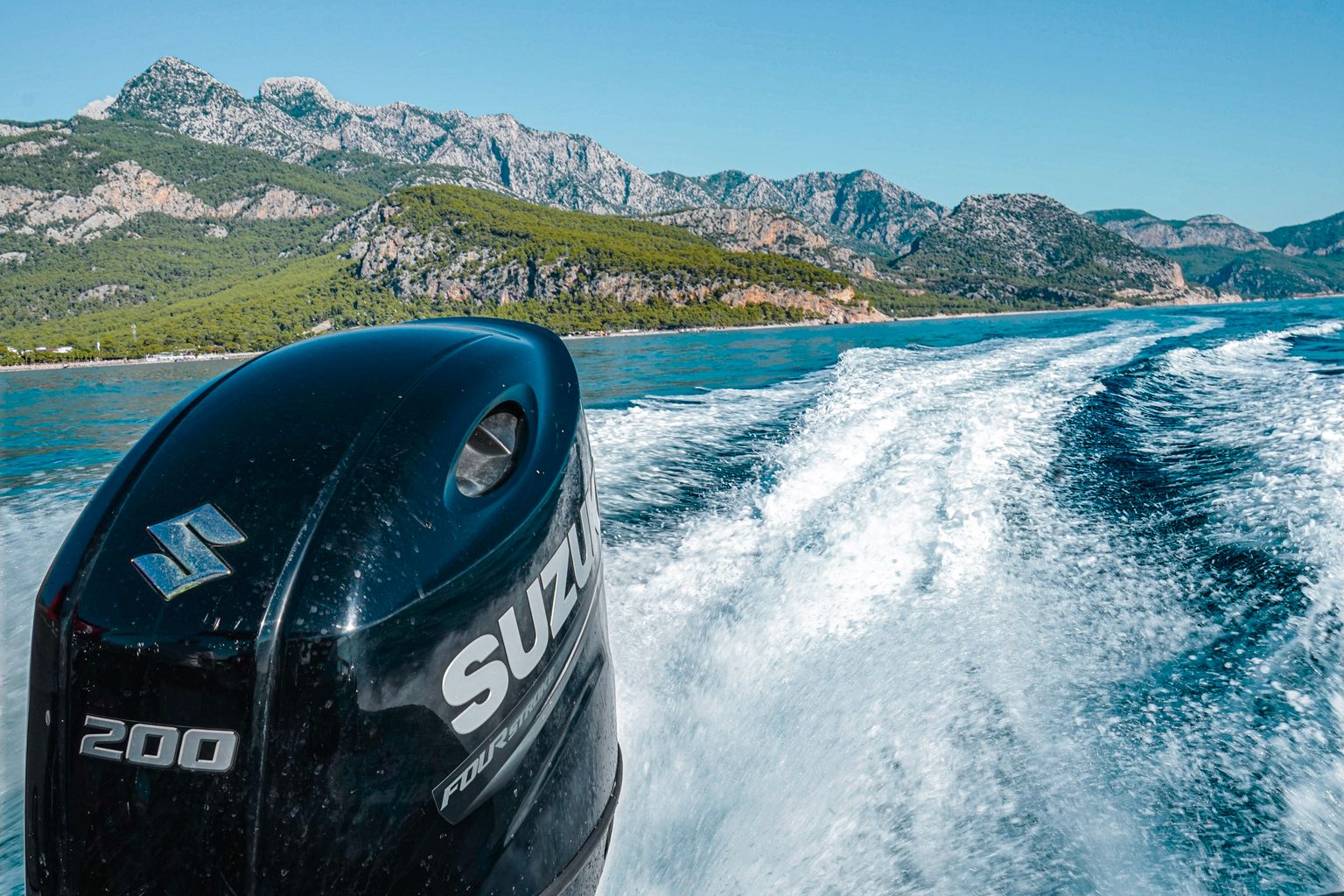
A boat needs enough horsepower to get its weight onto plane, and its top speed depends on that power compared with its weight, hull shape, and propeller. So two 200 hp boats can run very different speeds.
Federal rule 33 CFR 183.53 sets how builders calculate the maximum horsepower printed on an outboard boat’s capacity plate. It starts with a factor: length in feet times maximum transom width in feet.
For an 18-foot boat with a 7.5-foot transom, the factor is 135. Under the remote-steering formula, that’s (2 × 135) − 90, or 180 hp. Boats without remote steering use lower formulas.
So, What Should You Remember About Motorized Boats and How They Work?
Motorized boats and how they work come down to the Power Path: make power, move it, push water, and point the thrust. Every drive type answers the last three steps differently.
An outboard keeps everything in one bolt-on unit and steers by pivoting. An inboard hides the engine in the hull and steers with a rudder. A sterndrive splits the difference. A jet swaps the propeller for a water pump. Pods add joystick control for big boats, and electric drives trade range for silence and instant torque.
For shallow lakes and easy repairs, an outboard is hard to beat. For towing and a clean wake, look at an inboard. For quiet, short trips, go electric. Whatever you pick, check the capacity plate before you add horsepower.
Frequently Asked Questions
Q1:Is a 4-stroke outboard faster than a 2-stroke?
A:Stroke type alone doesn’t decide it. A two-stroke fires every crankshaft turn, so it’s often lighter for the same horsepower and can feel quicker off the line. A four-stroke usually runs quieter and smoother. Horsepower, weight, hull, and propeller matter far more for top speed.
Q2:Do all outboard motors have a pee hole?
A:Most outboards have one. The “pee hole” is the telltale, a small outlet that sprays a thin stream of cooling water while the engine runs. A steady stream shows the water pump is circulating water. A weak or missing stream can mean a clogged outlet or a worn pump impeller.
Q3:Are boat engines hard to work on?
A:Checking oil, flushing with fresh water, and swapping spark plugs are manageable for most owners. Outboards are the easiest to reach because the whole powerhead sits under one cover. Inboards and sterndrives tuck into tight engine bays, so bigger repairs usually go to a certified marine mechanic.
Q4:How fast will a 9.9 hp outboard motor go?
A:It depends on what it pushes. Boat weight, hull type, load, and propeller decide the speed, so a 9.9 hp motor on a light inflatable runs very differently than on a loaded aluminum boat. For a real number, check the motor maker’s performance data.
Q5:How far can an electric boat go on one charge?
A:Range depends on battery capacity and how much energy the boat uses. Speed is a major factor, since running slower cuts power draw. Hull design, weight, wind, waves, current, and load matter too, so two boats with similar motors can see very different range.
Q6:Do boats have brakes?
A:No. Boats slow down by easing off the throttle. To stop faster or back up, shift into reverse so the propeller pushes water forward. Many jet boats and PWCs use a reverse bucket that redirects the jet stream for the same effect.