

Quick answer: Most standard motor yachts cruise between 20 and 30 knots (23 to 35 mph). Top speed depends on the type: big superyachts usually max out around 20 to 27 knots, sport cruisers can hit 35 to 50 knots, and the fastest high-performance yachts reach 70 to 73 knots (about 80 to 84 mph). Size, hull design, engine power, propulsion, fuel load and sea conditions all change how fast a yacht can go.
Yachts aren’t built for one kind of trip. Some are made for slow, comfortable cruising and long passages. Others are made for people who want to feel the hull lift and the spray fly. So “how fast can a yacht go?” has more than one honest answer.
In this guide, you’ll see the typical cruising and top speeds for standard motor yachts, sport cruisers, superyachts and sailing yachts, plus the record holders. You’ll also learn why two yachts of the same size can perform very differently, from hull shape and engines to weight and the weather on the day.
How Fast Can a Yacht Go?
Size, engine power, weight and design all shape a yacht’s speed. As a rule of thumb, most standard motor yachts cruise between 20 and 30 knots, or roughly 23 to 35 miles per hour. Performance models go a lot faster.
Most standard motor yachts cruise between 20 and 30 knots (23 to 35 mph) and reach top speeds of 35 to 58 knots, while high-performance or hyper-muscle superyachts can reach 70 to 73 knots (around 80 to 84 mph).
Speeds vary significantly depending on the design, size, and propulsion type.
Yacht speed is measured in knots, not miles per hour. One knot is one nautical mile per hour, or about 1.15 mph.
So a yacht doing 25 knots is moving at around 28.8 mph. That doesn’t sound like much next to a sports car, but on open water, in a vessel that weighs many tons, it feels fast. For comparison, see how fast cruise ships go.
How Fast Can Different Types of Yachts Travel?
Speed isn’t the top priority for every yacht. Some are built for comfort and range. Others use light materials and big engines to go faster. Here’s how the main types compare.
Yacht Speeds by Type
Here’s a closer look at each type.
1. How Fast Can Standard Motor Yachts Go?
Standard Motor Yachts: Cruise at 12 to 20 knots, with typical top speeds ranging from 20 to 30 knots.
Standard motor yachts are what most people picture when they think of recreational boating. They’re built for coastal trips, island hopping and long weekends away, with roomy interiors, comfortable seating and engines with plenty of power.
They aren’t chasing top speed. The goal is a smooth, enjoyable ride.
How fast a particular boat goes comes down to its displacement, engine setup, hull shape and how much weight it’s carrying on the day.
2. How Fast Can Sport Cruisers Go?
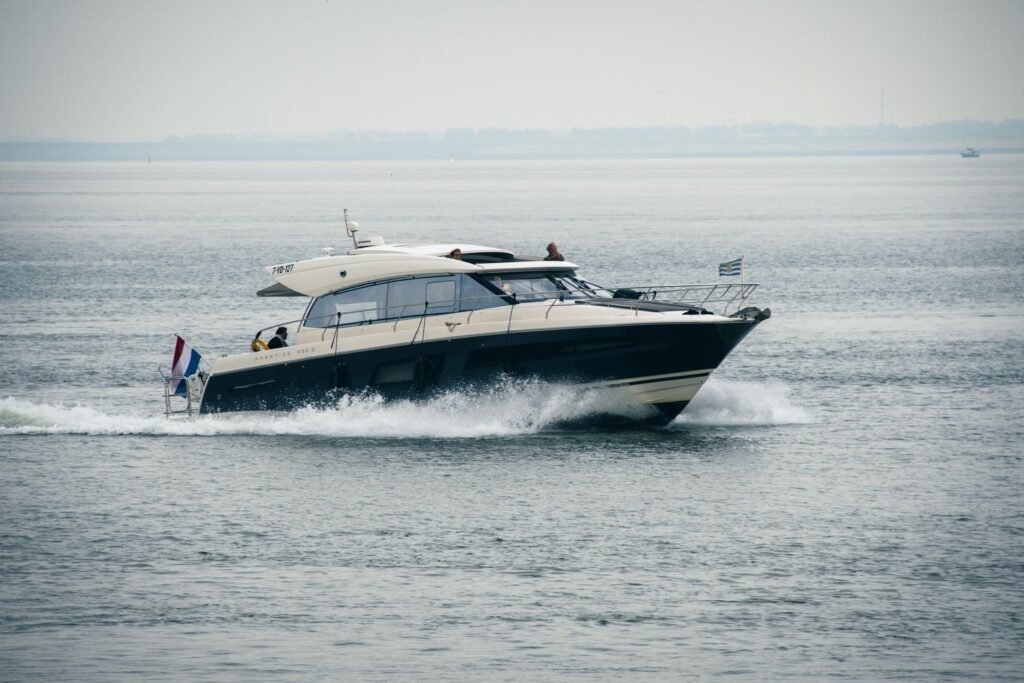
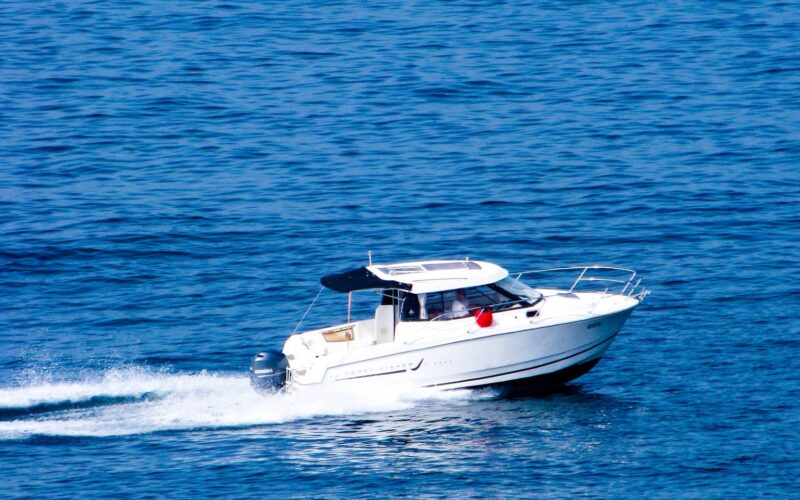
Planing & Sport Cruisers: Cruise around 20 to 30 knots and reach top speeds of 35 to 50 knots using lightweight hulls and powerful diesel or gas-turbine engines.
Sport cruisers sit in the middle ground for people who want comfort and speed in one boat. So how fast can a yacht go when it’s built for speed? A sport cruiser gives you a good idea.
Their light hulls lift up onto the surface of the water as they pick up speed. Less of the hull drags through the water, so they can go much faster than a traditional displacement yacht.
The engines matter just as much. Depending on the model, a sport cruiser can post impressive numbers while still giving you proper cabins, seating and space to relax.
They suit people who like quick trips, water sports and weekends on the move. The catch is fuel: the faster you go, the more you burn, so owners have to balance the fun against running costs.
3. How Fast Can Superyachts and Megayachts Travel?
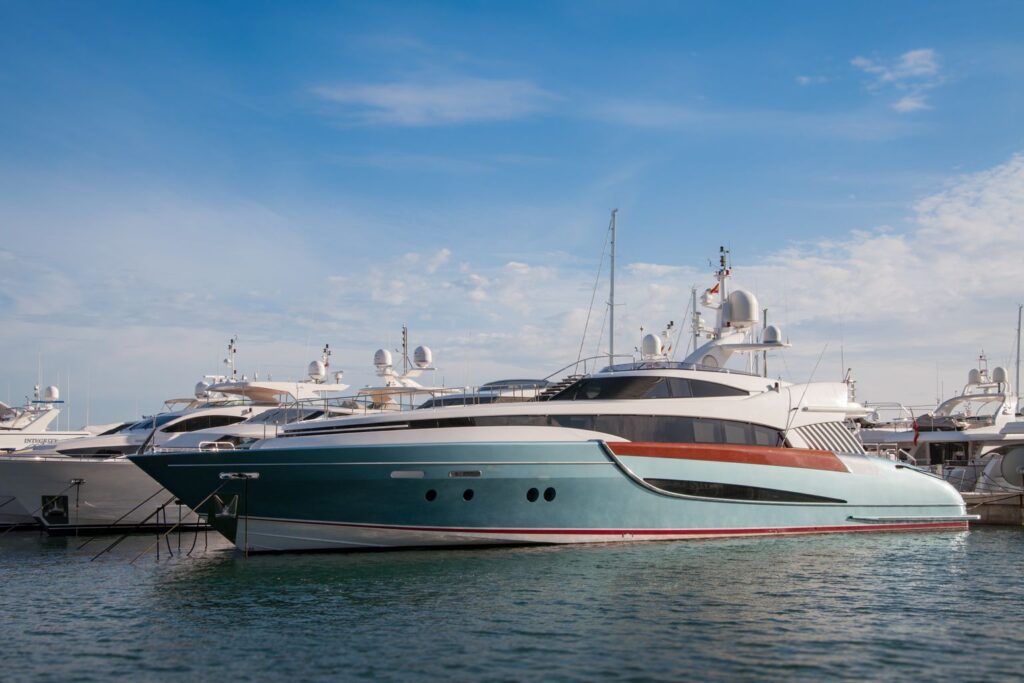
Superyachts & Megayachts: Standard large superyachts usually cruise at 12 to 18 knots and max out around 20 to 27 knots due to their massive weight.
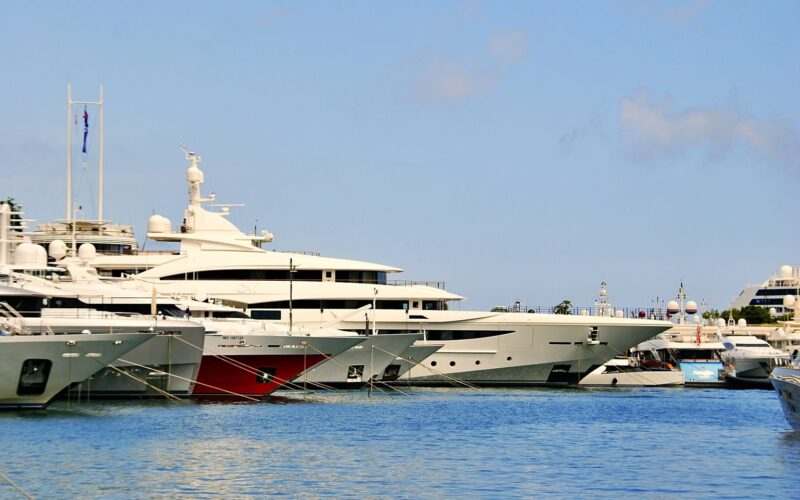
How fast can a yacht go when it weighs hundreds of tons? Usually not as fast as you’d think. Superyachts and megayachts are built around luxury, space and long voyages, not speed. Even the most expensive yachts in the world are usually designed for comfort first.
They can carry several decks, large guest cabins, pools, cinemas, professional galleys and plenty more. All of that adds up to a lot of weight, so they usually travel slower than smaller performance yachts.
Their engines are sized to move that weight smoothly and quietly. A few specialist superyachts are much quicker, but most are designed for stability, range, comfort and fuel efficiency first.
4. How Fast Can Sailing Yachts Go?
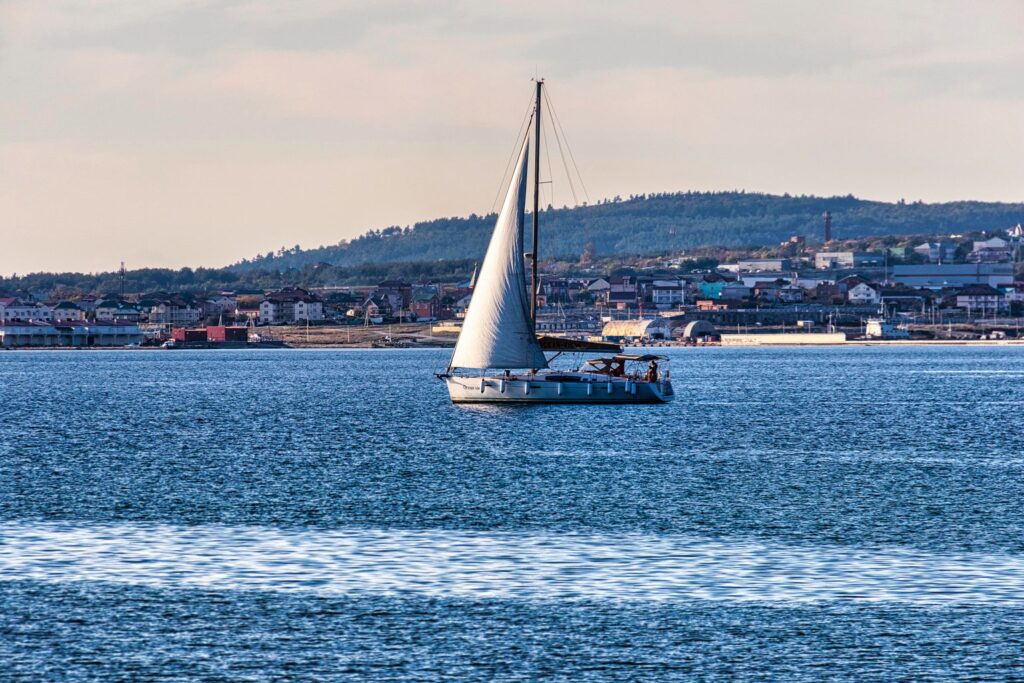
Sailing Yachts: Generally cruise slower at 5 to 10 knots relying on wind, though performance racing multihulls or high-tech sailing yachts can spike past 20 to 30+ knots under ideal conditions.
How fast can a yacht go under sail alone? It depends almost entirely on the wind. Sailing yachts run mainly on wind power, so their speed changes with the wind strength, sail design, hull shape, sea state and the skill of the crew.
A traditional sailing yacht moves at a gentle pace because it’s made for comfortable cruising.
Performance sailboats are a different story, especially multihulls. With a light build and a hull shaped to cut drag, they can fly when the conditions line up.
They can’t always do it, though. Wind direction, changing weather and rough water all decide how fast a sailing yacht can go on a given day.
5. What Is the World Record for Yacht Speed?
World Record Holders: The carbon-fiber Bolide 80 holds the title for the fastest superyacht in the world, hitting a top speed of 73 knots (~84 mph). Historic fast craft like The World Is Not Enough have also reached peak speeds around 70 knots.
These boats show how far yacht engineering has come.
Record-chasing yachts combine advanced materials, light construction, serious propulsion and carefully shaped hulls. Carbon fiber is a big part of that, because it’s very strong without adding much weight.
Just don’t mix up record speeds with everyday cruising. Most owners travel well below top speed to stay comfortable, run efficiently and keep fuel bills in check.
What Factors Control How Fast a Yacht Can Go?
Engine size is only part of the story. Several design and operating factors work together to decide how quickly and efficiently a yacht moves through the water.
That’s why two yachts with similar horsepower can perform very differently. Here are the factors that matter most.
1. How Does Hull Design Affect Yacht Speed?
The shape of the hull has a big effect on how a yacht moves. Different hulls are built for different speeds, weights and cruising styles.
Displacement Hulls: Displacement hulls sit in the water and are speed-limited by their waterline length.
You’ll find these hulls on many larger cruising yachts. They move steadily through the water and can carry a lot of weight.
Because they push water aside rather than rising above it, they have a lower speed ceiling than planing hulls.
Planing or Semi-Displacement Hulls: Planing or semi-displacement hulls rise up and skim across the water to reduce drag and unlock much higher speeds.
These hulls are common on sport cruisers and performance motor yachts.
As the yacht speeds up, the hull lifts toward the surface and meets less resistance.
That’s what lets these boats go faster, although weight, engine output and build quality still set the limit.
2. How Do Engine Power and Propulsion Affect Yacht Speed?
A yacht needs enough power, and an efficient way to turn that power into thrust, to reach its design speed.
Engine Power & Propulsion: High-speed yachts rely on massive diesel engines, surface-piercing propellers, water jets, or gas turbines.
Each system has its own strengths:
- Diesel engines: The most common choice on motor yachts. They deliver strong power and suit long-distance cruising.
- Surface-piercing propellers: These run partly above the waterline and are mostly found on high-performance boats.
- Water jets: They push the boat forward with a powerful stream of water and can also make it easier to maneuver.
- Gas turbines: Used on some specialist high-speed yachts that need a huge amount of power.
The right mix depends on the yacht’s size, target speed, range and overall design.
3. How Does Fuel Consumption Affect Yacht Performance?
Fuel use climbs fast as speed goes up, because the engines have to work much harder.
Fuel and Comfort Tradeoffs: Pushing a yacht to its maximum throttle drastically increases fuel consumption (sometimes burning multiple tons of fuel per hour) and creates a rougher ride.
On a large motor yacht, fuel can be one of the biggest running costs, on top of how much a yacht costs to buy.
Cruising at a moderate speed helps keep those costs down and lets you travel farther between fuel stops.
In practice, top speed is rarely the most useful speed. A yacht built for long passages is usually at its most efficient at a comfortable cruising pace, not flat out.
Sea conditions, how many people are on board, regular maintenance and the overall state of the boat also affect how much fuel it uses.
How Do Weather and Sea Conditions Affect Yacht Speed?
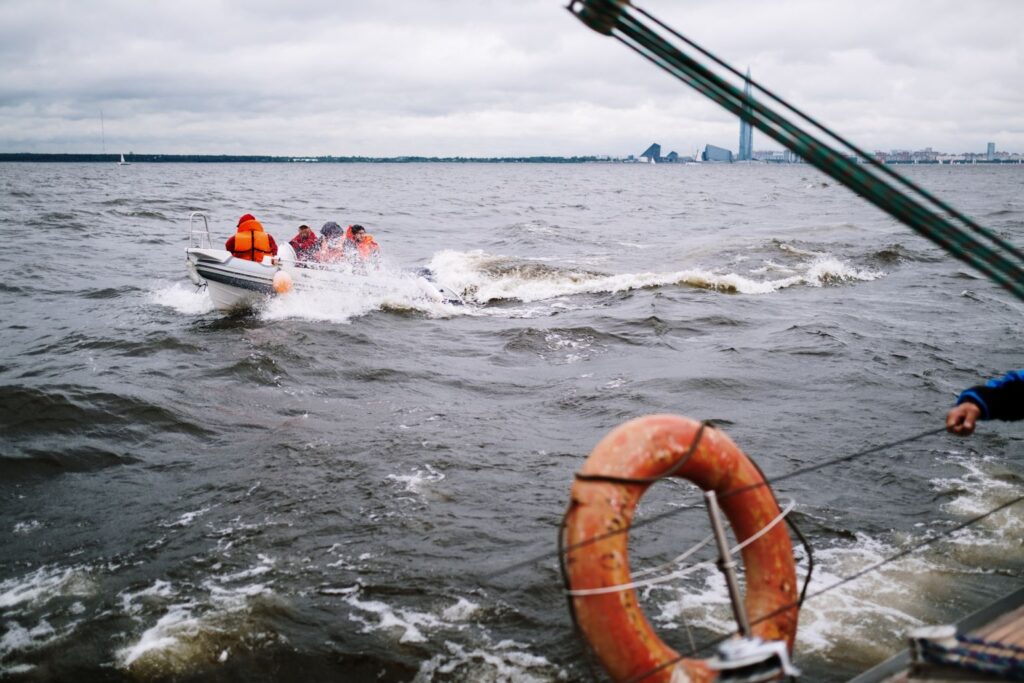
A yacht’s advertised top speed is a best-case number. Real conditions on the water can change both how fast it goes and how comfortable the ride feels.
How fast can a yacht go in rough water? Often a lot slower than its spec sheet says. Strong winds, big waves and choppy seas all make high speeds harder to hold.
Heading into the waves adds resistance and motion, so captains often slow down to keep the boat stable and the passengers comfortable.
Other things that make a difference:
- Wind direction: A headwind adds resistance, while a favorable wind can help a sailing yacht.
- Wave height: Bigger waves lower the speed you can comfortably hold.
- Water currents: Currents change the yacht’s speed over the ground.
- Water depth: Shallow water can affect how a yacht performs.
- Visibility: Fog or poor visibility calls for slower, more careful navigation.
That’s why the speeds you see in real life often differ from the manufacturer’s specs.
However powerful a yacht is, safety always comes before top speed.
How Can You Choose a Yacht Based on Speed and Performance?
Asking how fast can a yacht go is a good start, but it shouldn’t be your only question. Picking a yacht isn’t just about the highest number on the spec sheet. Think about how you’ll use it, how many people will come along and what kind of time on the water you want.
If you like relaxed coastal trips and longer passages, a standard motor yacht is a good fit.
If speed and water sports are the draw, look at sport cruisers.
For luxury, entertaining and long stays on board, a superyacht gives you the space and facilities.
And if you love sailing, a traditional sailing yacht or a performance multihull may suit you best.
Before you decide, weigh up these points:
- Intended use: Decide whether the yacht is for leisure, long-distance cruising, water sports or luxury travel.
- Cruising speed: Compare the speed a yacht can hold comfortably, not just its top speed.
- Fuel efficiency: Find out how much fuel it burns at different speeds.
- Maintenance costs: Bigger engines and advanced propulsion usually cost more to maintain.
- Passenger comfort: Look at the seating, cabins, stability and onboard facilities.
- Operating conditions: Think about the waters and weather you’ll be sailing in.
The right yacht is the one that fits your lifestyle, your budget and the kind of performance you actually want.
So, How Fast Can a Yacht Go?
Most standard motor yachts cruise at 20 to 30 knots, but the real answer depends on the type. Motor yachts, sport cruisers, superyachts and sailing yachts all perform differently because of how they’re designed and what they’re built to do.
Hull shape, engine power, propulsion, fuel use and sea conditions all play a part. Fast yachts can hit remarkable speeds, yet most owners care more about comfortable cruising, efficiency and safety than outright pace.
If you’re choosing a yacht, start with how you’ll use it, how far you want to go and what running costs you’re comfortable with. Comparing cruising speeds, engine specs and hull designs will point you to the boat that fits.
Frequently Asked Questions
Q1:How fast can a yacht go on average?
A:Most standard motor yachts cruise between 20 and 30 knots (23 to 35 mph). The exact speed depends on the yacht’s size, hull design, engine power and the conditions on the day.
Q2:Is 30 knots fast for a yacht?
A:Yes. 30 knots is about 34.5 mph, which is quick for most recreational yachts. Some sport cruisers and performance yachts can go a good deal faster.
Q3:How fast can a luxury superyacht go?
A:Most large superyachts cruise at 12 to 18 knots and top out around 20 to 27 knots. Their size and weight are what hold them back.
Q4:How fast can a sailing yacht travel?
A:Traditional sailing yachts usually cruise at 5 to 10 knots. High-performance sailboats and multihulls can top 20 to 30 knots when the conditions are right.
Q5:What is the fastest type of yacht?
A:High-performance motor yachts and purpose-built racing boats are the fastest. The carbon-fiber Bolide 80, for example, has hit 73 knots (about 84 mph). Light construction, powerful engines, efficient hulls and advanced propulsion are what make that possible.
Q6:Does a yacht use more fuel at higher speeds?
A:Yes. Going faster takes much more engine power, so fuel use rises quickly. Running at an efficient cruising speed keeps costs down and stretches the yacht’s range.

1 Comment